Snow and daffodils: the turning of the year.


Snow and daffodils: the turning of the year.
Terrible math jokes for Pi Day. And, a Pi Pie. (It’s cranberry-apple.)

Q: What did one math book say to the other?
A: Don’t bother me. I’ve got my own problems.
Q: Why should you never mention the number 288?
A: Because it’s two gross.
Q: Why do plants hate math?
A: It gives them square roots.
Q: Why did the student get upset when the teacher called her average?
A: It was a mean thing to say.
Q: How do you stay warm in a cold room?
A: Go to a corner. It’s always 90 degrees.
Q: What did the zero say to the eight?
A: Nice belt!
Q: Why did pi get its driver’s license revoked?
A: Because it didn’t know when to stop.
Q: What do you get when you take the sun and divide its circumference by its diameter?
A: Pi in the sky.
Q: What is a math teacher’s favorite vacation destination?
A: Times Square.
Q: Have you heard the latest statistics joke?
A: Probably.
Q: Why is it sad that parallel lines have so much in common?
A: Because they’ll never meet.
Q: Why is the obtuse angle upset?
A: Because it is never right.
Q: Why does no one ever speak to circles?
A: Because there’s no point.
Q: What do you call friends who love math?
A: Algebros.
Q: Why do atheists have trouble with exponents?
A: They don’t believe in higher powers.

For this day, a painting, and a poem by Philip Booth.
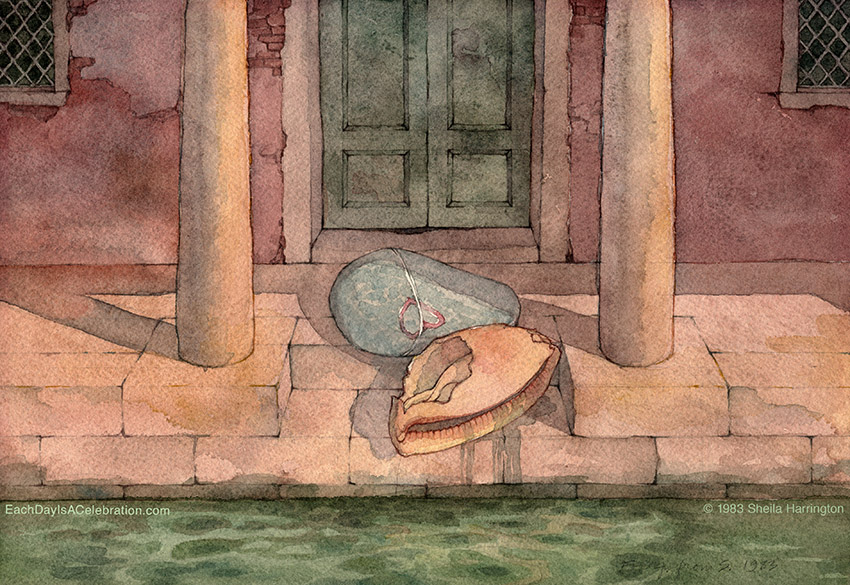
Nightsong
Beside you,
lying down at dark,
my waking fits your sleep.
Your turning
flares the slow-banked fire
between our mingled feet,
and there,
curved close and warm
against the nape of love,
held there,
who holds your dreaming
shape, I match my breathing
to your breath;
and sightless, keep my hand
on your heart’s breast, keep
nightwatch
on your sleep to prove
there is no dark, nor death.
—Philip Booth
For this double celebration, a sketch, and the first verse of a poem by Lynn Ungar.
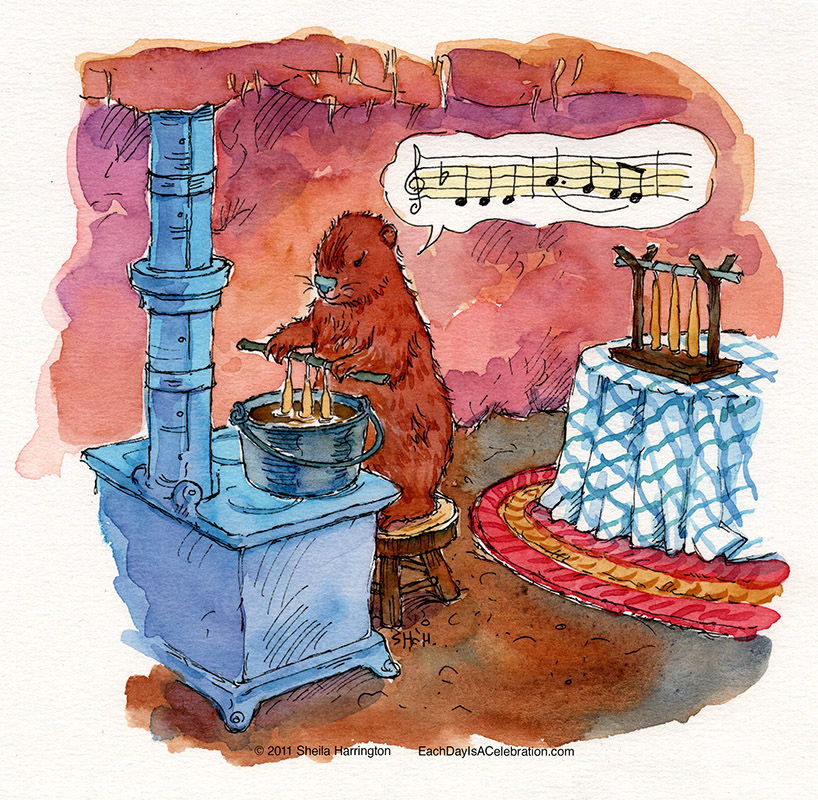
Celebrate this unlikely oracle,
this ball of fat and fur,
whom we so mysteriously endow
with the power to predict spring.
Let’s hear it for the improbable heroes who,
frightened at their own shadows,
nonetheless unwittingly work miracles.
Why shouldn’t we believe
this peculiar rodent holds power
over sun and seasons in his stubby paw?
Who says that God is all grandeur and glory?
—from “Groundhog Day” by Lynn Ungar
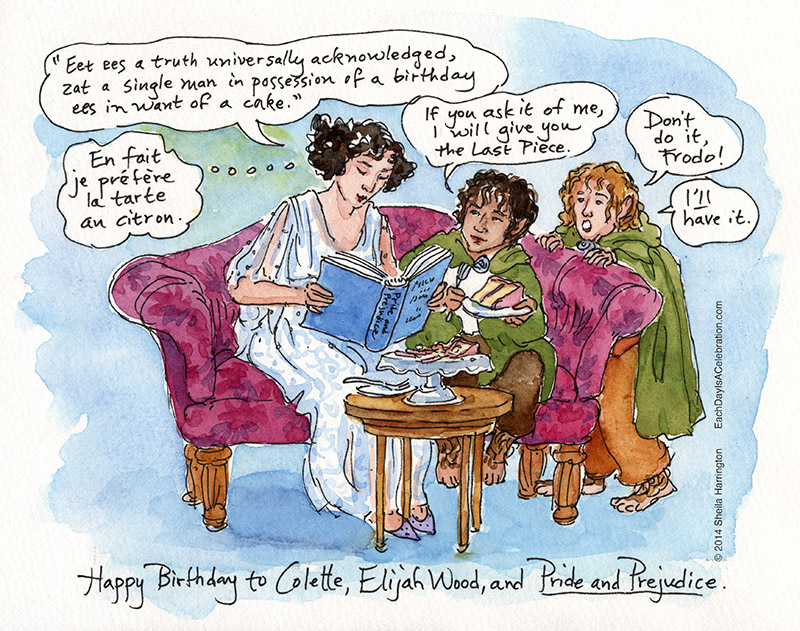
…and a celebration for Colette, Elijah Wood, and Jane Austen’s Pride and Prejudice (published on this day in 1813).
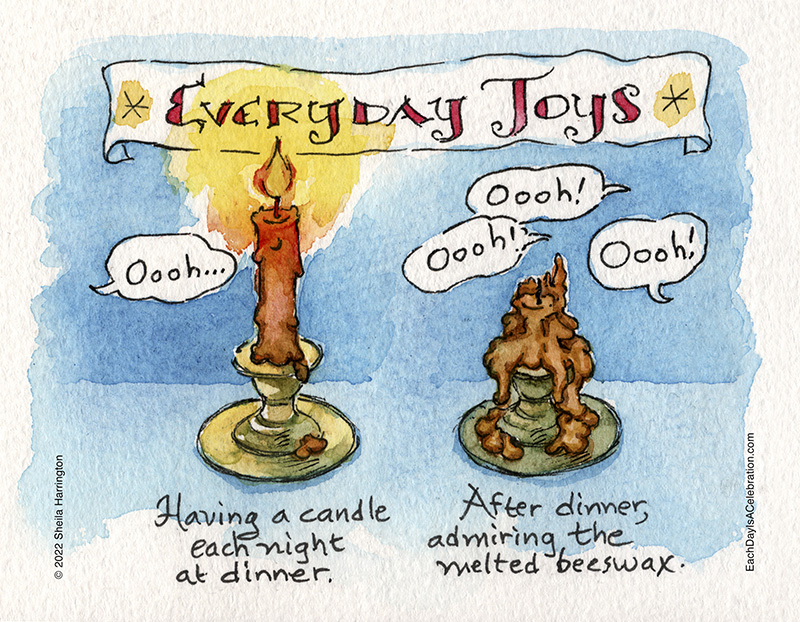
I think my family enjoys the dinner candle more as a capricious beeswax waterfall.
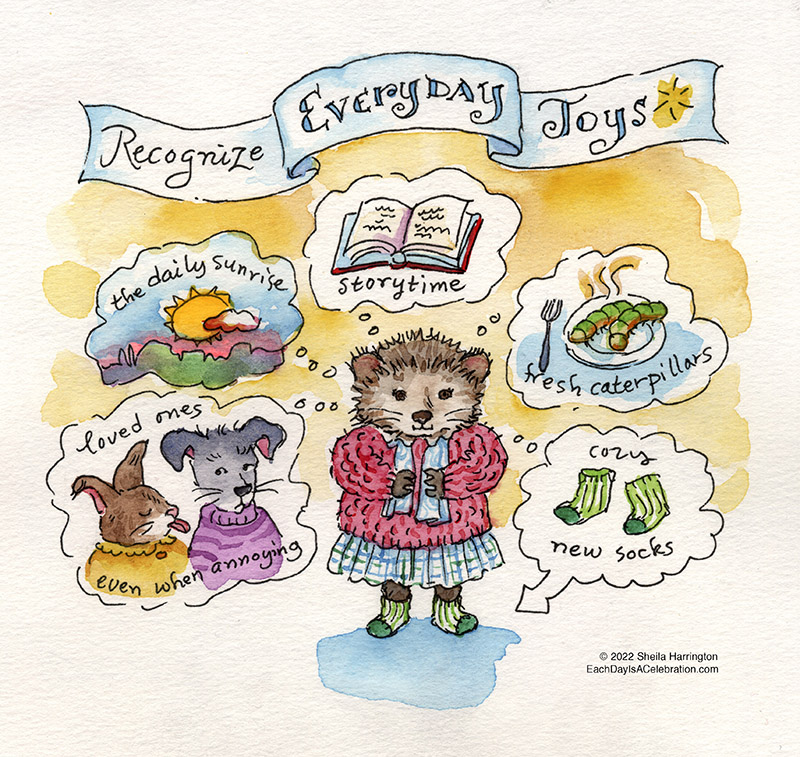
One of my resolutions for 2022. And beyond, I hope! May you have a Happy and Healthy New Year, everyone. May it surpass the last two, a pretty low bar.
Getting in on the ground floor.

We live an ocean apart, but at each get-together it’s as if no time has passed.