Living History

Accokeek

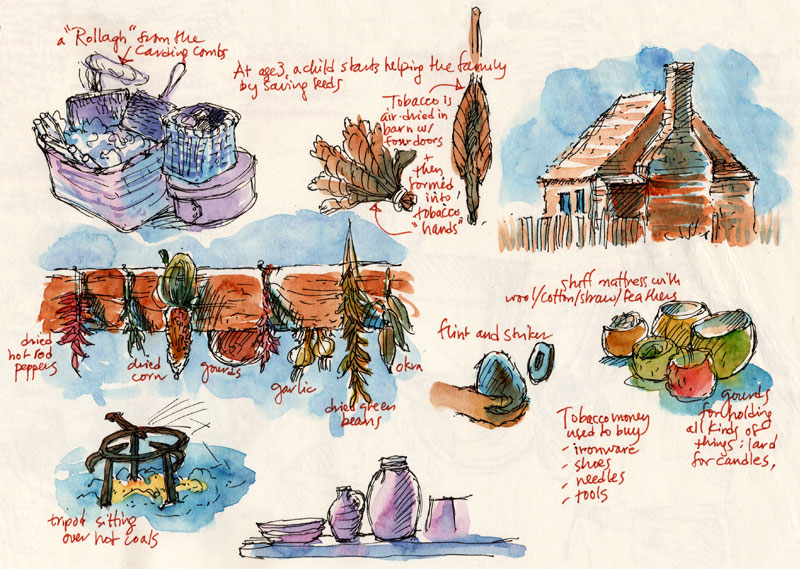
Fall is the time for farm field trips, to see the bounty of the season and learn how it was achieved. These sketches are from a trip to National Colonial Farm, an 18th century living history farm in Accokeek, Maryland, which sponsors a number of school programs for children in kindergarten through 6th grade, including homeschool groups. Our homeschoolers were a pretty savvy bunch, already intimately familiar with carding combs, rollaghs, hollowed gourd containers, dried herbs and the like, but they enjoyed the informative walking tour through the farm buildings, the wagon ride, and the opportunity to milk the cow (THAT we don’t have at home).


Stairway to heaven

MountainChapel

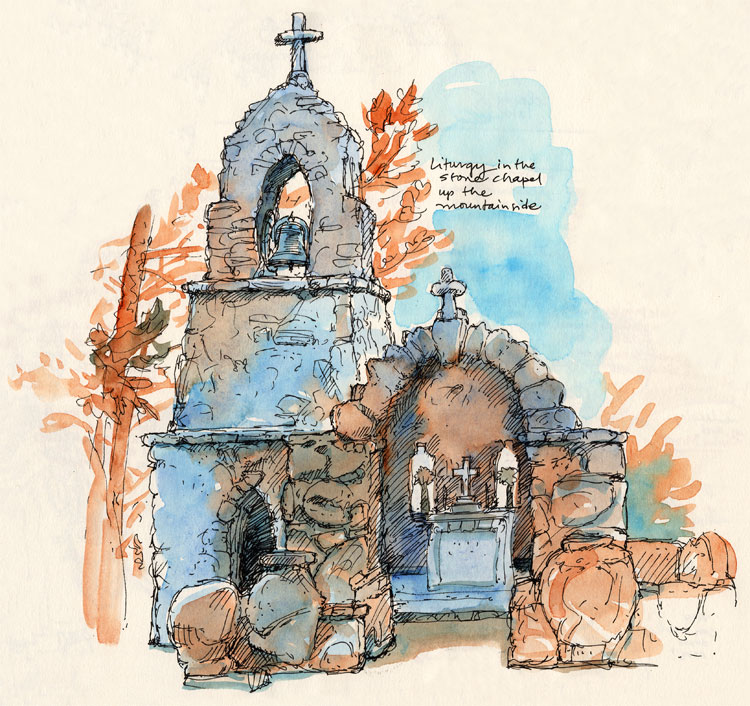
After a steep uphill trudge to a mountainside shrine, the rewards are worth the trek: the celebrant’s inspiring and funny thoughts to ponder; singing together among the birds and trees, everyone speckled with sunlight filtering through the autumn leaves; and at the end a quiet, inexpressibly affecting service for healing of body, mind, and soul.

Holy Water

ShrineMontPond

Our family is in the mountains with our church community for a couple of days of singing and dancing, meditation and prayer, and thoughtful discussion, interspersed with hay rides, hiking, and brownies. The accommodations are basic (hurray for indoor plumbing and hot running water!), and the food is definitely Lake Wobegon, but I always return with a feeling of good will toward all humankind and a renewed determination to do better at my part in it.

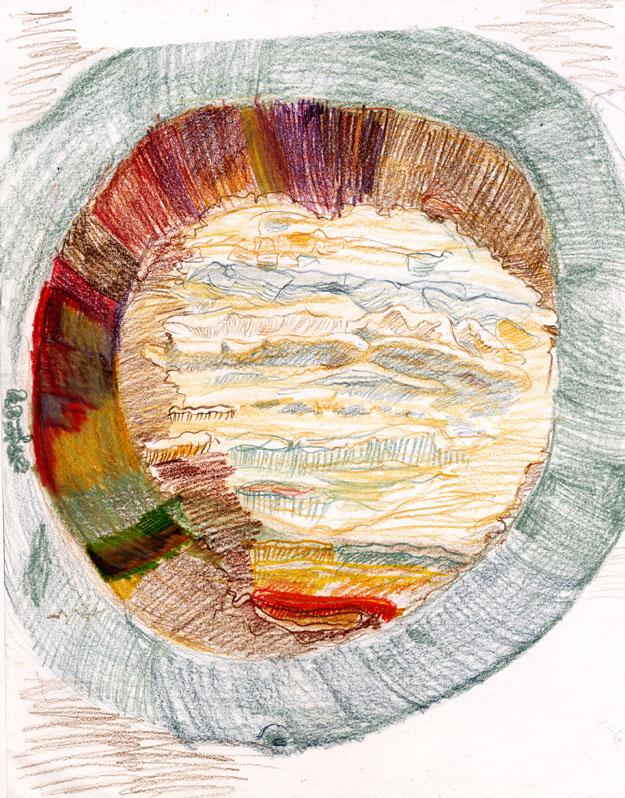
Here is a view of the pond, which, besides being restful for the spirit, is on Saturday afternoon the best place for children to immerse themselves in frogs and mud.

CakePolkaDotsMary

CakeSprinklesChristy

CakeChocCurls2Darius

CakeVioletsVictoria

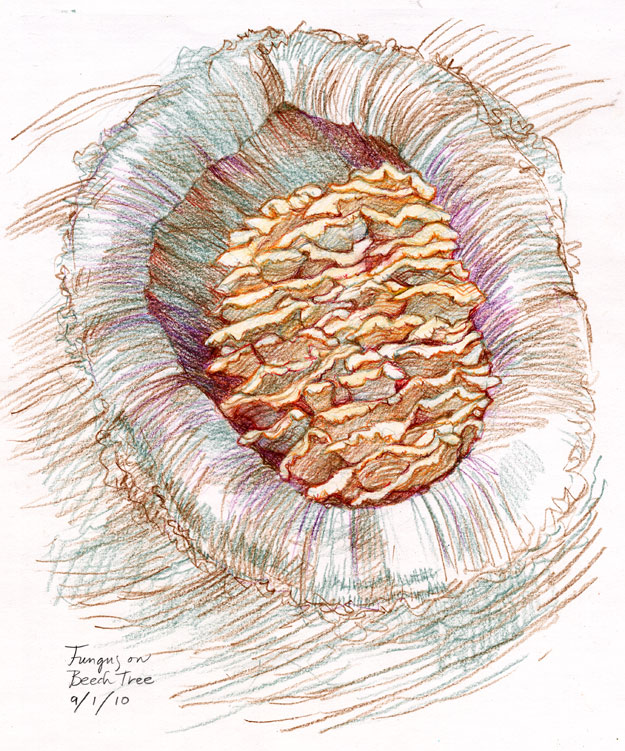
Fungus, beech tree

My daughter and I have walked past this beech tree fungus all summer, and we finally stopped one day with our pencils and paper and drew it. The depression in which the fungus growing (which I assume marks a fallen branch) is about ten inches high, and the fungus is surprisingly colorful. My drawing doesn’t really do it justice. My daughter’s is better—I will put that up next week.

FungusBeech

Thistle, late summer

Does anyone out there know the work of Indiana writer and farm wife Rachel Peden? I came across her by accident, and some of her books, out of print for a while, have recently been re-issued in paperback. I’ll bet our library used to carry her work before they started tossing out everything published before the 21st century.

Thistle

Purple ironweed is diminishing in the pastures; thistles are down to their last silken tassels; goldenrod pours its heap of raw gold into the general fund.

—Rachel Peden

La Belle Lucie

JLaBelleLucie

I believe I have mentioned before that our family is hopelessly addicted to this form of solitaire, so much so that when we go on vacation we now take along FOUR decks of cards, in case we all happen to play simultaneously.

In case you don’t already know the game, this is how it is played:

Shuffle the deck well. Deal out the entire deck in triads of overlapping cards, so that you can read the value and suit of each, until you run out of cards. The last card will stand alone.

The object is to remove all the cards from the tableau one by one into the four suits, beginning with the aces and ending with kings. Only the top card of each set (and any card standing alone) is available for play. Aces are removed as soon as they are available and set aside to form the four foundations. On the top card of any set may be placed the next lower card of the same suit, in order to free up the card trapped beneath it. But only one card may be moved at a time.

When no more moves can be made, the tableau is gathered, reshuffled, and laid out in triads two more times. On the third deal, any one card (called the merci) may be pulled out and played. This is often necessary to win the game, because a king lying above a lower card of the same suit will trap the player.

Although there is obviously chance involved in the way the cards are dealt, there is a great deal of strategy necessary in this game, which is what makes it so much fun. And one can occasionally win—even without the merci. (Not this time, though.)

CakeStarsColman

Live and Learn

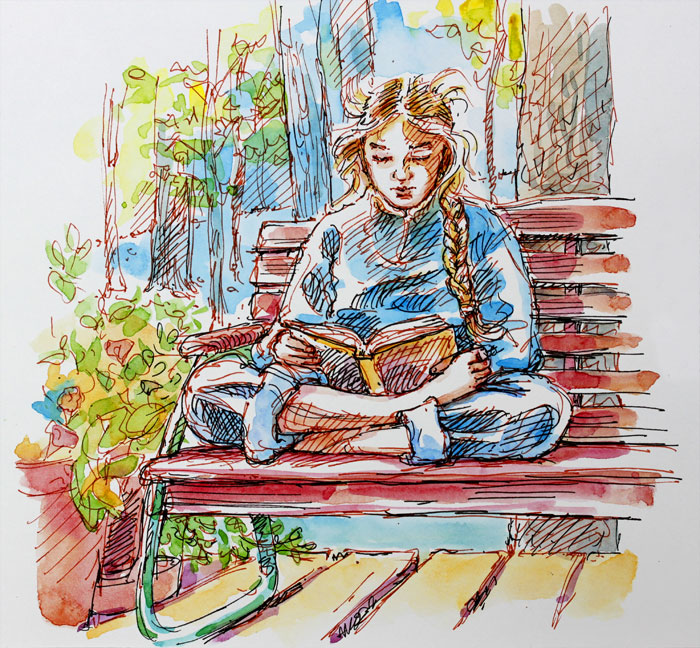
Despite my misgivings, my daughter packed sixteen (16!) chapter books for this vacation. I regretted toting any extra unecessary weight in our poor Prius, already stressed with four people and a dog and ten days of their presumably vital supplies. I pictured lugging the books home again mostly unread.

However, in addition to swimming, tubing, badminton and boules, a little Botany sketching, numerous board games, stargazing with her brother’s Star Walk app, and capably starting up and driving an 18-foot power boat (courtesy of the neighbors), here she is finishing book number 16. Now she’ll have to begin on her brother’s stack.

E&16Books

CakeWeddingMary & Brian