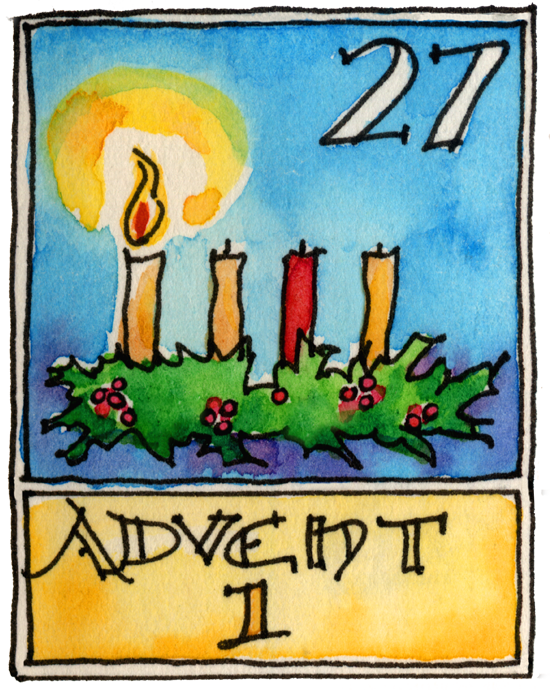
The first candle.
 Julia
Julia
 Bridget
The first candle.
Julia
Bridget
At all the major festivals and turning points of the year, it’s a natural impulse to find commonalities within the celebration with the larger human community, past and present, and gain a sense of connection.
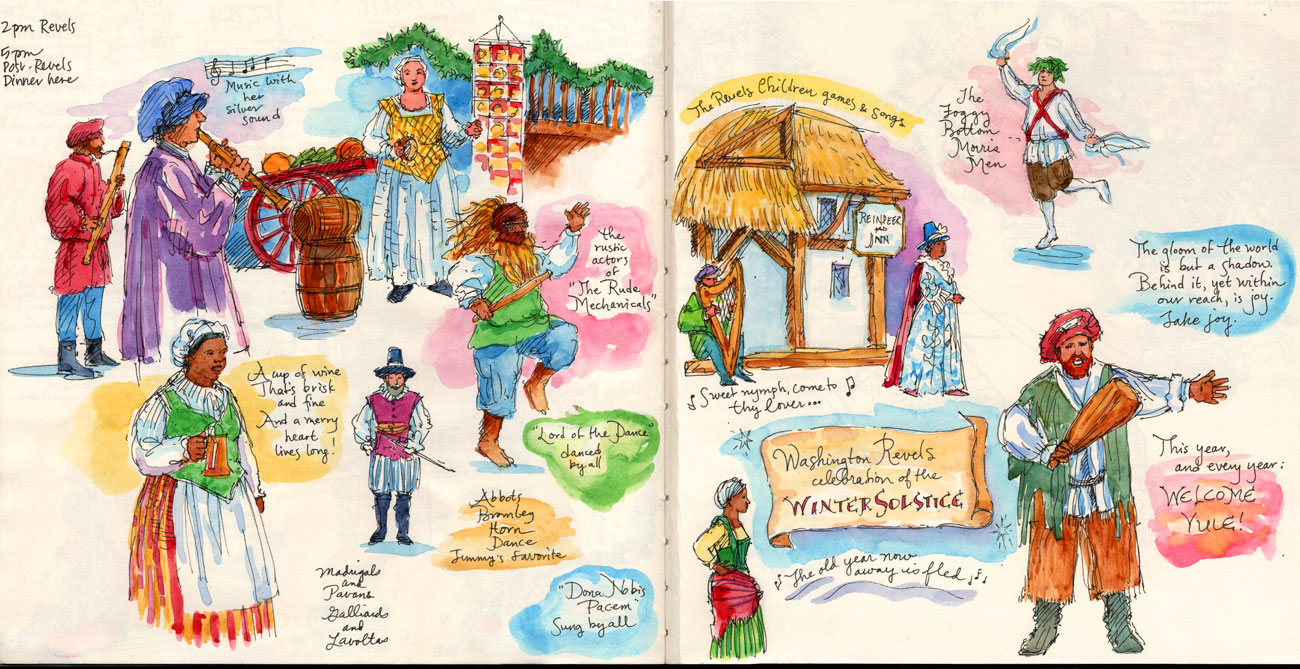
In this winter season, one especially delightful and moving experience of shared celebration is found in the music, dance, and storytelling of the Washington Revels, which each year changes its theme (always carefully researched and skillfully interpreted) but whose underlying message acknowledges and salutes the struggle to find beauty, joy, humor, peace, and love amid the darkness, uncertainty, and losses of our life journeys.
This year’s theme is Andalusian Treasures, and I quote:
Our 29th annual celebration of the winter solstice harkens back over 1,000 years to the confluence of Moorish, Sephardic and Iberian cultures in medieval Andalusia. Led by the antics of two fools, and joined by guest musicians, Trio Sefardi and Layali El Andalus (“Andalusian Nights” in Arabic), we celebrate the legacy of the extraordinary flowering of arts and culture that began there and extended to much of the world for centuries thereafter. Presenting the three cultures together on stage, we honor the symbol that Andalusia has become (however imperfect the reality) of the ideal of greater tolerance and acceptance among different cultures and religions.
Shows run December 3-4 & 9-11, matinees and evenings, at GW Lisner Auditorium in Washington, DC, and there are still tickets available through the Revels website. Believe me, once you have sung and danced for the solstice with a thousand gladsome companions, you will want to make it a family tradition.
The sketches above are from a 2007 Renaissance Revels. For more Revels sketches, and a mini-history, please see Revelry.
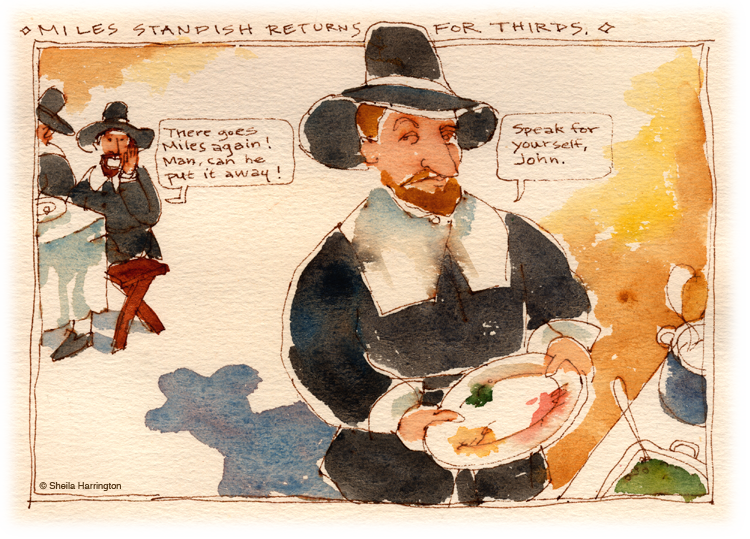 And a Happy Thanksgiving to everyone.
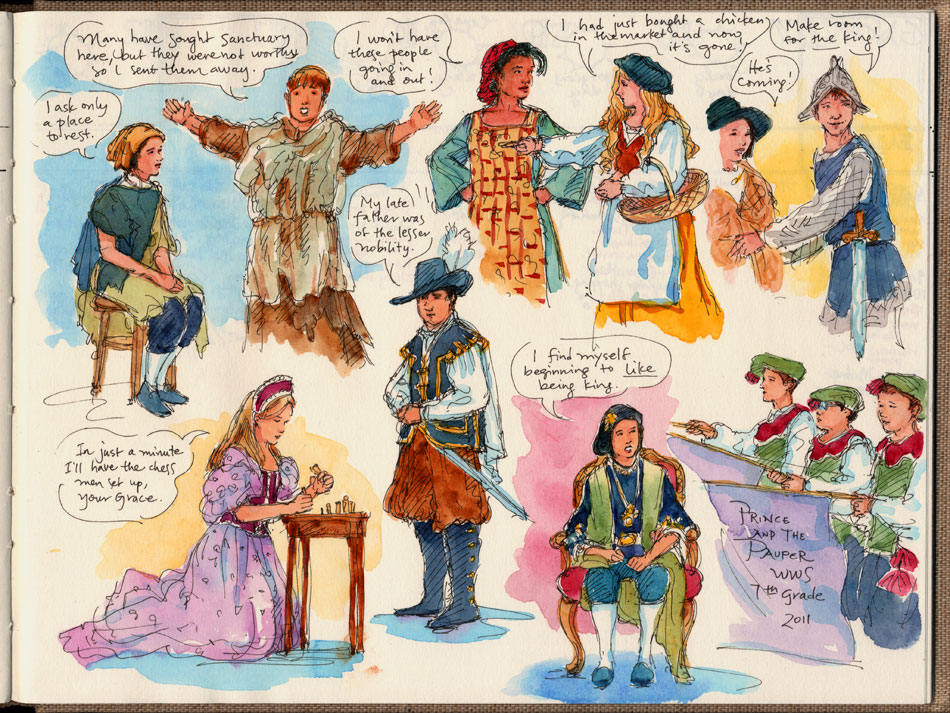
I sat in one day on a rehearsal of my daughter’s class play and surreptitiously made some sketches. Having seen a number of middle school plays over the years in which the objective seems to be to finish and get off stage as fast as possible, I was struck by the students’ expressiveness, pacing, and evident understanding of their roles.
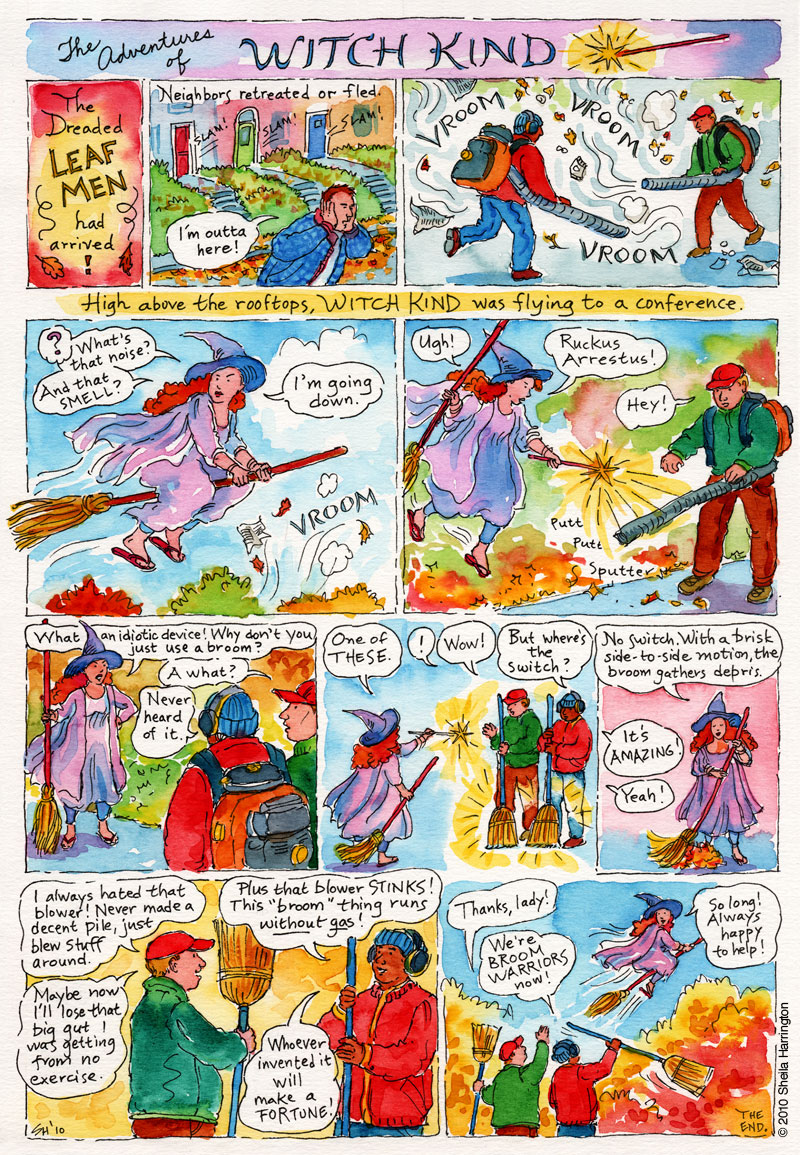
It’s time for another visit from Witch Kind. (Click twice for full size.)
—Emily Dickinson
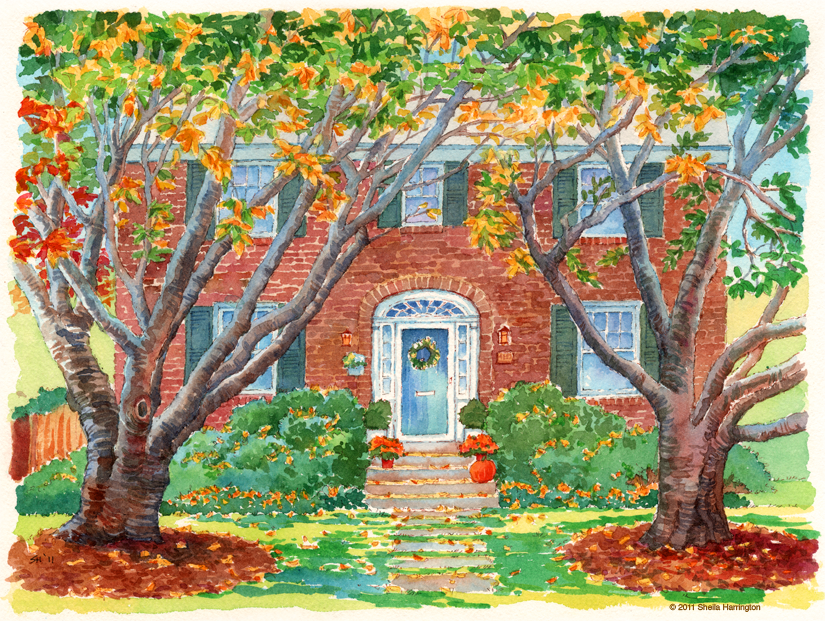
I received a commission to paint the dramatic double-cherry trees in front of this house at two different seasons of the year (and also create two sets of seasonal cards with the results). Here they are in their golden gowns of autumn. Watch for them in spring.
And today is the birthday of amateur scientist and astronomer Benjamin Banneker (1731-1806), grandson of a slave, who surveyed the new city of Washington, DC, created a 1792 almanac that went through several editions, and corresponded with Thomas Jefferson. For a picture and a mini-bio, please see Skywatcher.
 Tashina
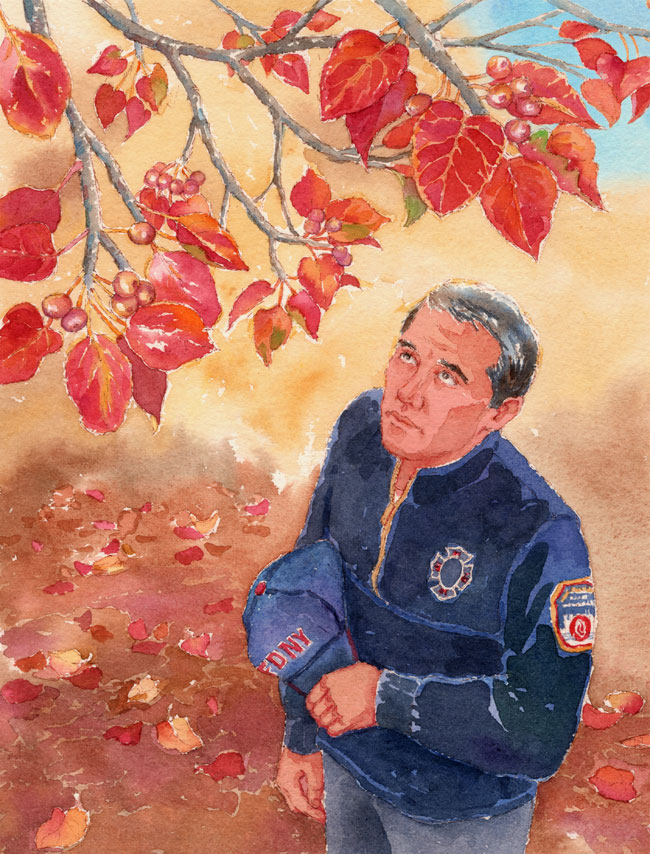
As the leafy color grows more beautiful daily, I post this autumn illustration, one of a series I painted for the book The Survivor Tree by Cheryl Aubin, based on the true story of a tree that survived the September 11th attacks on the World Trade Center.
For more on this book, please see The Survivor Tree.
 Anne
Anne
—Faiz Ahmed Faiz, translated by Naomi Lazard
 Filomena
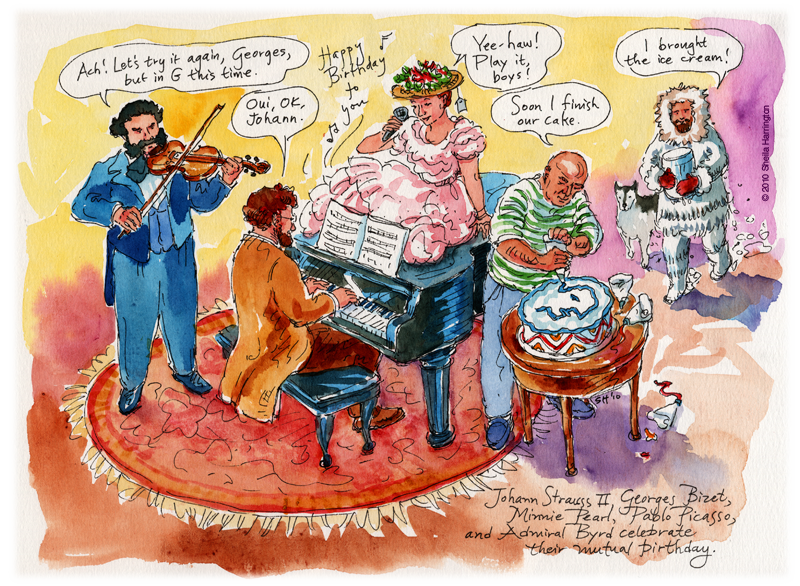
For all you October 25th Birthday Babies.
 Benny
Benny
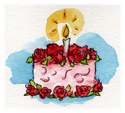 Geneviève
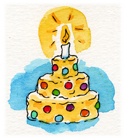 Chiquita
This image is now available as an 8.5″ x 11″ archival high-resolution print.